SAPEN is committed to advancing clinical nutrition in South Asia. Join us in promoting excellence in parenteral and enteral nutrition through research, education, and collaboration.
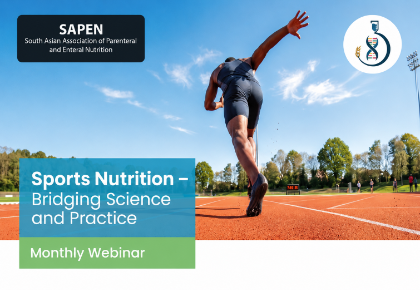
The Sports Nutrition – Bridging Science and Practice webinar series provided a comprehensive overview of how evidence-based sports medicine and nutrition can be applied to improve athletic performance, promote recovery, prevent injuries, and support long-term athlete health. The sessions emphasized that nutrition is a key component of successful athletic performance and should be integrated with training, medical care, and recovery strategies. The webinar also highlighted the importance of multidisciplinary collaboration among sports physicians, nutritionists, physiotherapists, coaches, and exercise scientists to deliver personalized, athlete-centered care. Overall, the series encouraged participants to apply scientific knowledge in practical settings to help athletes achieve optimal performance while maintaining their physical and mental wellbeing.
Introduction to Sports Medicine – Keeping Athletes Healthy
The first session introduced the fundamentals of Sports and Exercise Medicine and its role in supporting athlete health and performance. It explained that sports medicine extends beyond injury treatment to include injury prevention, exercise prescription, rehabilitation, performance monitoring, and athlete welfare. The session emphasized the importance of multidisciplinary teamwork and demonstrated how individualized training, scientific assessment, proper nutrition, and structured recovery work together to improve performance while reducing the risk of injuries and overtraining.
Applied Sports Nutrition
The second session focused on the practical application of nutrition in sports. It highlighted the importance of meeting athletes' energy requirements through balanced intake of carbohydrates, proteins, healthy fats, and adequate hydration. The presentation discussed nutrient timing before, during, and after exercise, recovery nutrition, body composition management, and the responsible use of dietary supplements. The session emphasized that nutrition plans should be personalized according to the athlete's sport, training intensity, competition schedule, and performance goals to maximize both performance and recovery.
Performance Nutrition – Understanding Relative Energy Deficiency in Sport (RED-S)
The final session focused on Relative Energy Deficiency in Sport (RED-S) and its effects on athlete health and performance. It explained how inadequate energy intake relative to training demands can negatively impact multiple body systems, including hormonal function, bone health, immunity, metabolism, and psychological wellbeing. The session emphasized the importance of early identification, appropriate nutritional interventions, and multidisciplinary management to restore adequate energy availability. It concluded that preventing RED-S through proper nutrition, education, and regular monitoring is essential for maintaining both athletic performance and long-term health.
 event
event